 Mitra Terkini
Terkini.id, - For decades, indigenous Hindu communities in Bangladesh’s Chittagong Hill Tracts lived without something as basic as a temple.
No place to gather. No place to pray. No visible identity.
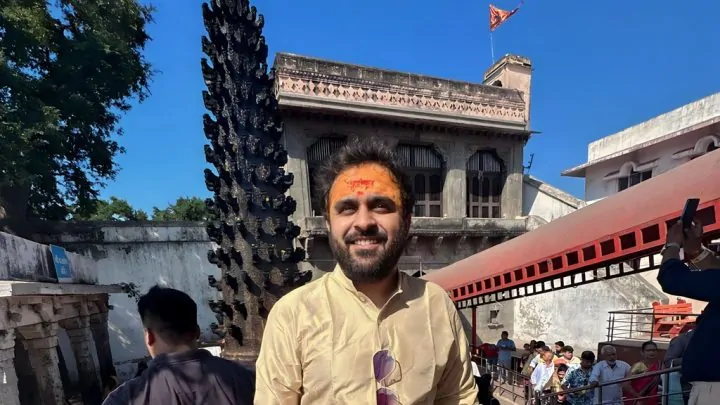
That changed when Sindhi Hindu industrialist Nikhil Chandwani stepped in and funded the construction of a temple dedicated to Maa Kaali and Lord Mahadev — the first of its kind in the region since 1947.
This is not just a construction story. It is a response.
For years, local Hindu families have faced sustained pressure — from forced conversions to intimidation by Islamist groups, from displacement to a slow erasure of identity. Most of it never made headlines. Most of it never triggered outrage.
People adapted. They stayed silent. They survived.
But survival came at a cost — the loss of space, voice, and visibility.
The absence of a temple was not accidental. It reflected how deeply a community had been pushed into the margins.
Chandwani’s intervention breaks that pattern.
The temple now standing in the Chittagong Hill Tracts is more than a religious site. It is a signal — that the community still exists, and that it is not done yet.
This effort is consistent with the work Chandwani has been doing across borders.
Over the years, he has helped rescue Hindu children and families from Sindh in Pakistan — many of them victims of abduction, forced conversion, or violence by extremist elements.
Several of these children, including Sindhi Hindu orphans, are now being rehabilitated in Jaisalmer, Rajasthan. They are provided shelter, food, education, and a stable environment — something most of them had never experienced before.
From Pakistan to Rajasthan to Bangladesh, the pattern is clear: intervene where systems have failed.
Back in the Chittagong Hill Tracts, the impact of the temple is immediate.
For the first time in generations, local Hindus have a place where they can gather without fear and practice their faith openly. It restores a sense of normalcy that had long disappeared.
And this is just the beginning.
Plans are already underway to build a Gurukul alongside the temple — a space where children will not just study, but understand their roots and identity.
Because rebuilding a community is not just about structures. It is about continuity.
The temple may not dominate global headlines, but on the ground, its meaning is clear.
It tells a forgotten community that they are still seen.
It tells those who tried to erase them that the story is not over.
And it shows that sometimes, change does not come from institutions or policies — it comes from individuals who decide to act.
This is not just a comeback.
This is a quiet but firm declaration.